JPG vs PNG vs WEBP: Which Image Format Should You Use?
Choosing the right image format can make a big difference in image quality, file size, website speed, and compatibility. Many people use JPG, PNG, and WEBP files every day without knowing how these formats are different from each other.
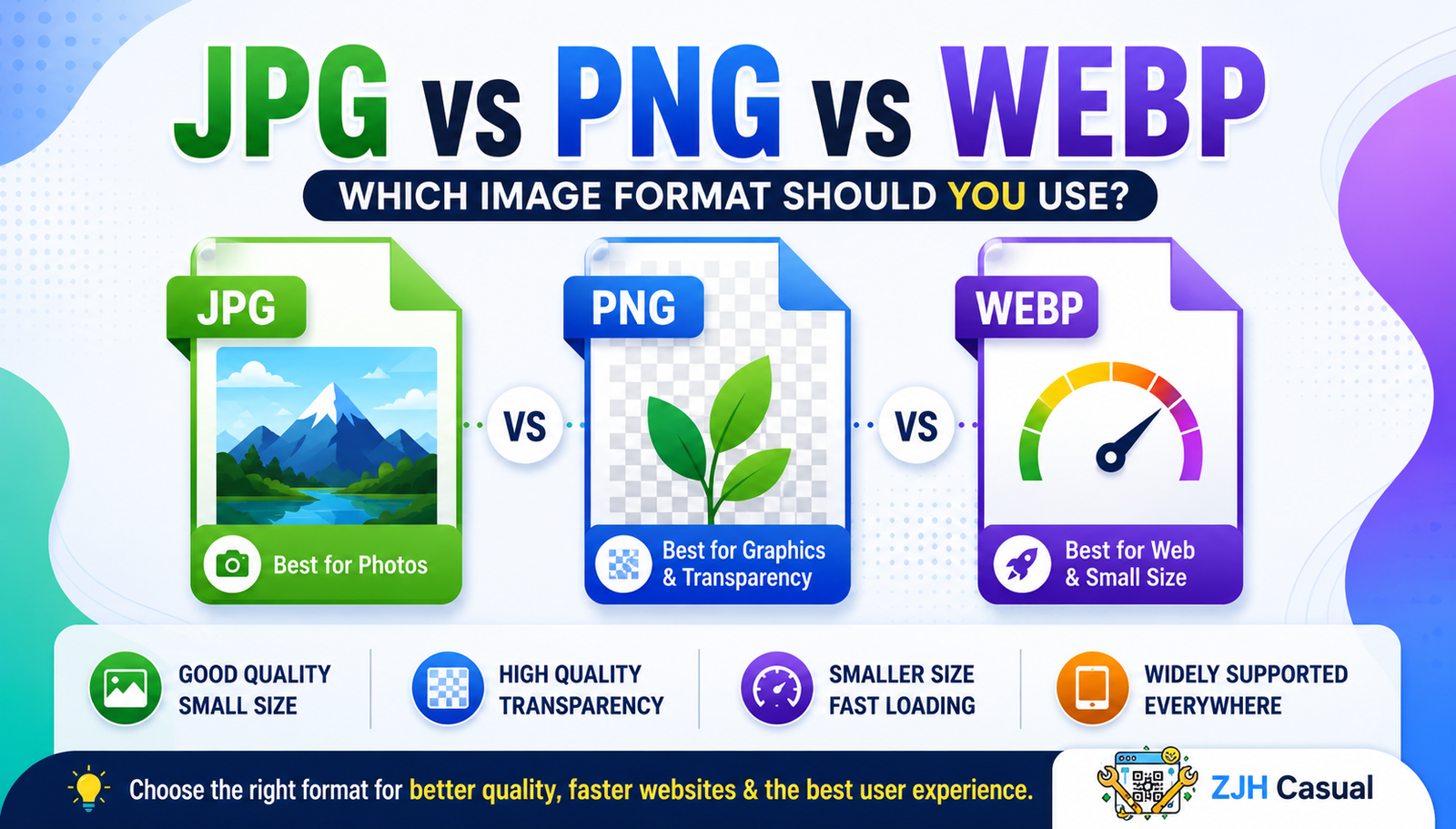
Although all three formats are commonly used for digital images, each one is designed for slightly different purposes. JPG is popular for photographs, PNG is useful when transparency and high-quality graphics are important, and WEBP is a modern format designed to provide good quality with smaller file sizes.
Understanding the differences between these formats can help you choose the right one for your website, social media posts, documents, or other digital projects.
What Is JPG?
JPG, also known as JPEG, is one of the most widely used image formats in the world. It is particularly popular for photographs and images with many colours.
JPG uses compression to reduce the size of an image. This makes JPG files easy to store, share, and upload online. However, JPG uses lossy compression, which means some image data may be removed during compression.
JPG Is Best For:
- Digital photographs
- Social media images
- Website photos
- Online galleries
- General-purpose image sharing
One of the biggest advantages of JPG is its small file size. This makes it a convenient choice when you want to save storage space or upload images quickly.
However, JPG does not support transparent backgrounds. If you need an image with transparency, another format may be more suitable.
What Is PNG?
PNG is another popular image format that is widely used for graphics, screenshots, logos, and images that require transparency.
Unlike JPG, PNG can preserve image details without the same type of lossy compression. It also supports transparent backgrounds, which makes it particularly useful for logos and design elements.
PNG Is Best For:
- Logos
- Icons
- Screenshots
- Digital illustrations
- Images with transparent backgrounds
PNG files can sometimes be larger than JPG files because they preserve more image information. For this reason, PNG may not always be the best choice for large photographs.
However, when image quality and transparency are important, PNG is often an excellent option.
What Is WEBP?
WEBP is a modern image format developed for the web. It was designed to provide high-quality images while keeping file sizes relatively small.
WEBP supports both lossy and lossless compression. It can also support transparency and animation, depending on how the image is created.
WEBP Is Best For:
- Websites
- Blogs
- Online stores
- Web applications
- Faster-loading pages
Because WEBP files can provide good quality at smaller file sizes, they are widely used for modern websites.
Smaller image files can help reduce the amount of data that browsers need to download, which can contribute to a better browsing experience.
JPG vs PNG vs WEBP: Main Differences
Image Quality
PNG is often a good choice when preserving detailed graphics is important. JPG can provide excellent quality for photographs, although excessive compression may reduce image quality.
WEBP can provide a strong balance between quality and file size, making it a useful option for many online applications.
File Size
JPG files are often relatively small, especially when used for photographs. WEBP can sometimes provide an even smaller file size while maintaining good visual quality.
PNG files can be larger, especially when used for detailed images or large graphics.
Transparency
PNG supports transparent backgrounds, which makes it popular for logos and graphics.
WEBP can also support transparency. JPG does not support transparent backgrounds.
Website Performance
For websites, reducing image file size can help reduce the amount of data that needs to be loaded. WEBP is often useful for this purpose because it is designed specifically with modern web use in mind.
JPG can also be a good choice for photographs, while PNG may be more appropriate for graphics that require transparency.
Which Format Should You Choose?
The best image format depends on what you are creating.
Choose JPG When:
- You are working with photographs
- You need a widely supported format
- You want a relatively small file size
- You are sharing images online
Choose PNG When:
- You need a transparent background
- You are working with logos or icons
- You need detailed digital graphics
- You want to preserve sharp graphic elements
Choose WEBP When:
- You are creating images for a website
- You want a smaller file size
- You want a modern web-friendly format
- You want a good balance between quality and compression
Can You Convert JPG, PNG, and WEBP?
Yes. Images can be converted between different formats using online image conversion tools.
For example, you may convert:
- JPG to PNG
- PNG to JPG
- JPG to WEBP
- WEBP to JPG
- PNG to WEBP
- WEBP to PNG
The best format depends on how you plan to use the image. For example, a website owner may convert a large JPG image to WEBP to reduce file size, while a designer may convert an image to PNG to preserve transparency.
Tips for Choosing the Right Image Format
Before converting an image, consider the following:
1. Think About the Purpose
A photograph, logo, screenshot, and website banner may all require different formats.
2. Consider File Size
If you are uploading images to a website, a smaller file can help reduce the amount of data required to load the image.
3. Check Transparency Requirements
If your image needs a transparent background, JPG is not suitable. PNG or WEBP may be a better option.
4. Consider Compatibility
Some older applications or platforms may have limited support for newer image formats. If compatibility is important, JPG and PNG are widely supported options.
5. Avoid Unnecessary Conversion
Converting an image repeatedly between formats can sometimes reduce image quality, especially when lossy compression is involved. It is generally better to keep the original image and convert it when needed.
Convert Images Easily with ZJH Casual
ZJH Casual provides simple online tools for converting images between different formats. Whether you need JPG, PNG, WEBP, PDF, SVG, GIF, AVIF, HEIC, TIFF, or other popular formats, an online converter can make the process easier.
Instead of installing complicated software, you can choose the format you need and convert your image for your specific purpose.
Final Thoughts
JPG, PNG, and WEBP each have their own advantages. JPG is a popular choice for photographs and everyday image sharing. PNG is useful for high-quality graphics and transparent backgrounds. WEBP is a modern option that can provide good image quality with efficient file sizes, especially for websites.
There is no single image format that is perfect for every situation. The best choice depends on your image type, required quality, file size, transparency needs, and where you plan to use the image.
By understanding the differences between JPG, PNG, and WEBP, you can choose the right format for your images and convert them whenever necessary.